Root Canal Treatment is a highly effective dental procedure used to treat infection or inflammation inside a tooth. When the soft inner portion of a tooth, known as the dental pulp, becomes infected or damaged due to deep decay, cracks, trauma, or repeated dental procedures, a root canal can help eliminate the infection while preserving the natural tooth.
At Purely Dental – Pediatric, Multi-Speciality & Implant Centre, our dental team focuses on providing comfortable, safe and effective root canal treatment while prioritising the preservation of your natural tooth and long-term oral health.
A tooth consists of several layers. Beneath the hard enamel and dentin lies the dental pulp, which contains nerves, blood vessels and connective tissues.
When bacteria reach the pulp because of extensive tooth decay, a deep cavity, fracture or dental trauma, the pulp can become inflamed or infected. Without appropriate treatment, the infection may spread beyond the tooth and potentially affect the surrounding gums and bone.
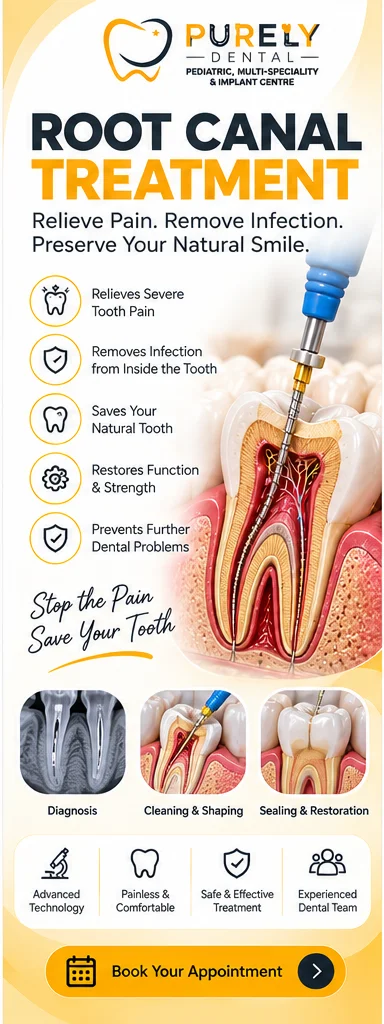
Root Canal Treatment, also known as endodontic treatment, involves carefully removing the infected or damaged pulp, cleaning and disinfecting the internal root canals, shaping the canals and sealing them to help prevent reinfection.
The tooth can then be restored so that it can continue to function normally.
A root canal may be recommended when the nerve or pulp inside the tooth has become infected or irreversibly inflamed.
Common causes include:
In some cases, the infection may develop without obvious symptoms. This is why regular dental examinations are important, particularly when a tooth has previously undergone extensive treatment.
Not every infected tooth produces the same symptoms. However, some common warning signs include:
Pain may occur spontaneously or become worse while eating or biting.
A tooth may remain painful or sensitive for an unusually long time after exposure to hot or cold foods and beverages.
Discomfort when biting or applying pressure to the tooth can indicate inflammation around the tooth.
Swelling of the gum surrounding a tooth may occur when infection is present.
A collection of pus around the tooth or gum may indicate a more advanced infection.
A damaged or infected tooth may sometimes become darker than the surrounding teeth.
Tenderness or discomfort around a particular tooth should be evaluated by a dentist, especially if it persists.
At Purely Dental, the procedure is planned according to the condition of the tooth and the extent of infection.
The dentist first examines the affected tooth and evaluates your symptoms. Dental X-rays or other diagnostic imaging may be recommended to understand the root structure and identify the extent of infection.
Local anaesthesia is administered to numb the tooth and surrounding area, helping make the procedure comfortable.
A small opening is carefully created in the tooth to provide access to the infected pulp and root canal system.
The infected or damaged pulp tissue is removed. The root canals are then carefully cleaned and disinfected to reduce bacteria and infected tissue within the tooth.
The canals are carefully shaped to prepare them for effective sealing. Modern dental instruments and techniques can help improve precision during this stage.
Once the canals have been thoroughly cleaned and prepared, they are filled and sealed with suitable dental materials to help prevent bacteria from entering again.
A root canal-treated tooth may require a permanent filling or dental crown, depending on the amount of tooth structure remaining and the location of the tooth.
A crown can provide additional protection and help restore the tooth's strength, shape and function.
One of the biggest advantages of root canal treatment is that it can allow a damaged or infected natural tooth to be preserved instead of extracted.
Whenever possible, saving the natural tooth can help maintain normal chewing function and the natural appearance of your smile.
By removing infected or inflamed pulp tissue and treating the underlying problem, root canal treatment can help resolve pain caused by pulp infection.
The infected tissue inside the tooth is removed and the root canal system is cleaned and disinfected.
After appropriate restoration, the treated tooth can generally be used for normal biting and chewing.
Treating an infected tooth can help prevent the infection from progressing and affecting surrounding tissues.
In many situations, root canal treatment provides an alternative to removing the natural tooth.
Many patients are concerned that root canal treatment will be painful. Modern dentistry, effective local anaesthesia and improved techniques have made root canal procedures considerably more comfortable.
The procedure itself is performed with the tooth numb. Some mild sensitivity or discomfort may occur after treatment as the surrounding tissues settle, particularly if there was significant infection or inflammation before treatment.
If you experience persistent or increasing pain after treatment, it is important to contact your dentist for an evaluation.
When a tooth is badly infected, patients may sometimes assume that extraction is the only solution.
However, when the tooth can be predictably restored, root canal treatment may allow the natural tooth to be retained.
Preserving a natural tooth can help maintain:
If a tooth cannot be restored because of extensive structural damage, severe fracture or other factors, your dentist may discuss extraction and tooth-replacement options such as dental implants or bridges.
After the root canal procedure, the tooth may require a permanent restoration.
For teeth that have lost a significant amount of structure, a dental crown may be recommended to provide additional protection against fracture.
Good oral hygiene remains important after root canal treatment. Continue brushing twice a day, cleaning between your teeth and attending regular dental check-ups.
A root canal-treated tooth should also be monitored as part of your routine dental care.
Although not every dental infection can be prevented, good oral hygiene can significantly reduce the risk of tooth decay and other problems that may eventually affect the pulp.
Follow these habits:
Early treatment can often prevent a small dental problem from becoming a more complicated one.
Do not wait for severe pain before seeking dental care.
You should schedule a dental examination if you experience:
Persistent toothache | Sensitivity | Pain while biting | Swelling | Gum tenderness | Tooth discolouration | A broken or cracked tooth
Early diagnosis can help determine whether the tooth can be treated with a relatively conservative procedure or requires more extensive treatment.
At Purely Dental – Pediatric, Multi-Speciality & Implant Centre, our approach combines modern dental techniques with careful diagnosis and patient-focused treatment.
Our goal is not simply to treat the infection but to preserve the natural tooth whenever clinically possible and restore comfortable dental function.
Every root canal case is different. The recommended treatment depends on factors such as the extent of infection, tooth anatomy, remaining tooth structure and overall oral health.
Advanced Technology
Modern diagnostic and treatment techniques to support precise dental care.
Comfortable Treatment
A patient-centred approach designed to make your dental experience as comfortable as possible.
Safe & Effective Care
Treatment planned according to your individual dental condition.
Experienced Dental Team
Professional evaluation and personalised treatment planning.